
About the Community of Practice (CoP)
The INSPIRE Neighbourhood Community of Practice (CoP) was established in response to growing interest in using smaller geographic areas to support primary care attachment and broader health system planning across diverse local contexts.
The CoP brings together partners from across Ontario who are working on neighbourhood and small-area mapping to inform health system planning, implementation, and evaluation.
Objectives
- Share approaches to neighbourhood and small-area mapping across Ontario with organizations engaged in this work.
- Exchange tools and resources that support planning and implementation.
- Develop guiding principles to support Ontario Health Team (OHT) planning and care delivery.
Partners & Working Groups
The CoP was initially established with Ontario Health Teams in Eastern Ontario and has expanded to include provincial and regional health system planners, researchers, and trainees.
Participants include those working in urban, rural, and remote settings, ensuring that diverse perspectives inform CoP activities.
Partners and working groups contribute local knowledge and expertise to support the development and validation of population definitions that enable meaningful health outcomes. This work contributes to the creation of a shared set of guiding principles.
Core Partners
- Frontenac Lennox and Addington Ontario Health Team
- Lanark Leeds Grenville Ontario Health Team
- Hastings Prince Edward Ontario Health Team
- Ottawa Neighbourhood Study
- Ontario Community Health Profiles Partnership
Working Groups
- Rural & Remote Working Group
Ontario Health Team
Year 1 implementation partner for the Neighbourhood Building Blocks study.

Ontario Health Team
Partner supporting neighbourhood-informed planning across mixed urban and rural contexts.
Ontario Health Team
Partner contributing local planning perspectives and community-based implementation insight.

Hosting and Data Partner
OCHPP hosts the CoP repository and website, contributes spatial analysis and methodological expertise, and supports the CoP through participation in meetings and shared resources.
Membership
The CoP is open to anyone in Ontario working on, or interested in, neighbourhood and small-area approaches to health system planning. Contact us using the form, below, if you want to find out more about joining.
CoP Work Plan
Year 1 (2025–2026)
- A timeline and list of activities from Year 1 can be found here:
Year 2
Coming soon
Year 3
Coming soon
Objective
Update health system partners and report on the Year 1 approach.
Activity / Report
- Initial presentation and reporting for the Ministry of Health, Ontario Health, and the Frontenac Lennox and Addington Ontario Health Team.
- Work with stakeholders to identify data needs, plan analyses, and establish a neighbourhood collaborative working group.
- Complete data analysis and draft and finalize reporting for FLA OHT.
- Present the Year 1 approach through INSPIRE research rounds.
Timeline
- September 2024 to January 2025: analysis and working group development.
- March 2025: Ministry of Health and Ontario Health update.
- June 2025: follow-up presentation and reporting milestone.
Objective
In alignment with the Ministry of Health, work with Ontario Health Teams and primary care partners to implement neighbourhood mapping and neighbourhood-level sociodemographic and health use data.
Activity / Report
- Continue collaboration with the Ontario Community Health Profiles Partnership to provide open-access mapped data for Ontario Health Teams.
- Spread the framework developed with FLA OHT to teams with a similar urban and rural mix.
- Work with diverse Ontario Health Teams, including urban-only and rural-only populations, to iterate the method.
Timeline
- Year 2 milestone: March 2026.
- Year 3 milestone: March 2027.
Objective
Understand how the new attributed population models influence neighbourhood mapping.
Activity / Report
- Conduct a provincial survey of Ontario Health Teams to determine capacity, resources, and current use of neighbourhoods for planning.
- Provide recommendations on the use of geographic mapping within the Ontario Health Team attribution framework.
Timeline
Year 3 milestone: March 2027.
Objective
Build a provincial working group and establish a policy engagement stream.
Activity / Report
- Identify provincial teams conducting neighbourhood-based planning and establish regular meetings to identify best practices.
- Establish communication channels with the Primary Care Action Table to support translation into practice and policy.
- Run virtual policy dialogues with communities and stakeholders and report on deliberative discussions.
Timeline
- Working group initiation: March 2026.
- Dialogue and reporting milestone: March 2027.
News & Updates
Updates, including upcoming meetings, announcements, and relevant information, will be posted here.
In 2025-2026, the CoP and research team surveyed Ontario Health Teams to understand how neighbourhoods are being defined and used for planning. The survey was distributed to all 58 OHTs through Ontario Health, and 19 responded.
Findings highlighted varied approaches to small-area definitions, common challenges including boundary misalignment and data access, and strong interest in shared methods.
A draft framework for assigning small-area geographies across Ontario was presented to the CoP in April 2026.
The framework proposes using preferred local neighbourhood definitions where they exist, supplemented by default geographies such as Aggregate Dissemination Areas in urban areas and Census Subdivisions in rural areas where they do not, to enable province-wide coverage and comparability.
Next CoP meeting: TBA
CoP Resources
Meeting minutes, presentations, and supporting materials can be accessed here.
-
Meeting Summary
-
Meeting Presentations
- Welcome and Purpose of the Day: Small Geographies — Building Blocks for Health System Planning — Catherine Donnelly and Claire Kendall (PDF)
- Setting the Context: Building the Foundation for Small-Area Mapping in Ontario — Ontario Community Health Profiles Partnership (OCHPP) (PDF)
- Using Small Area Geographies for Health System Planning: A Provincial POV — Karin Hohenadel (PDF)
- From Attribution-Based to Place-Based Reporting on OHT Geographies — Vijay Kunaratnam (PDF)
- Ottawa Neighbourhoods: Across-OHT Planning in the Ottawa Region — Kaden Carr and Claire Kendall (PDF)
- Within-OHT Planning: Using Small Geographies to Inform Health System Planning — Suzanne Pashley (PDF)
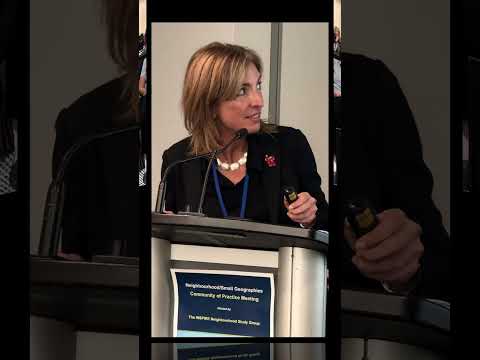
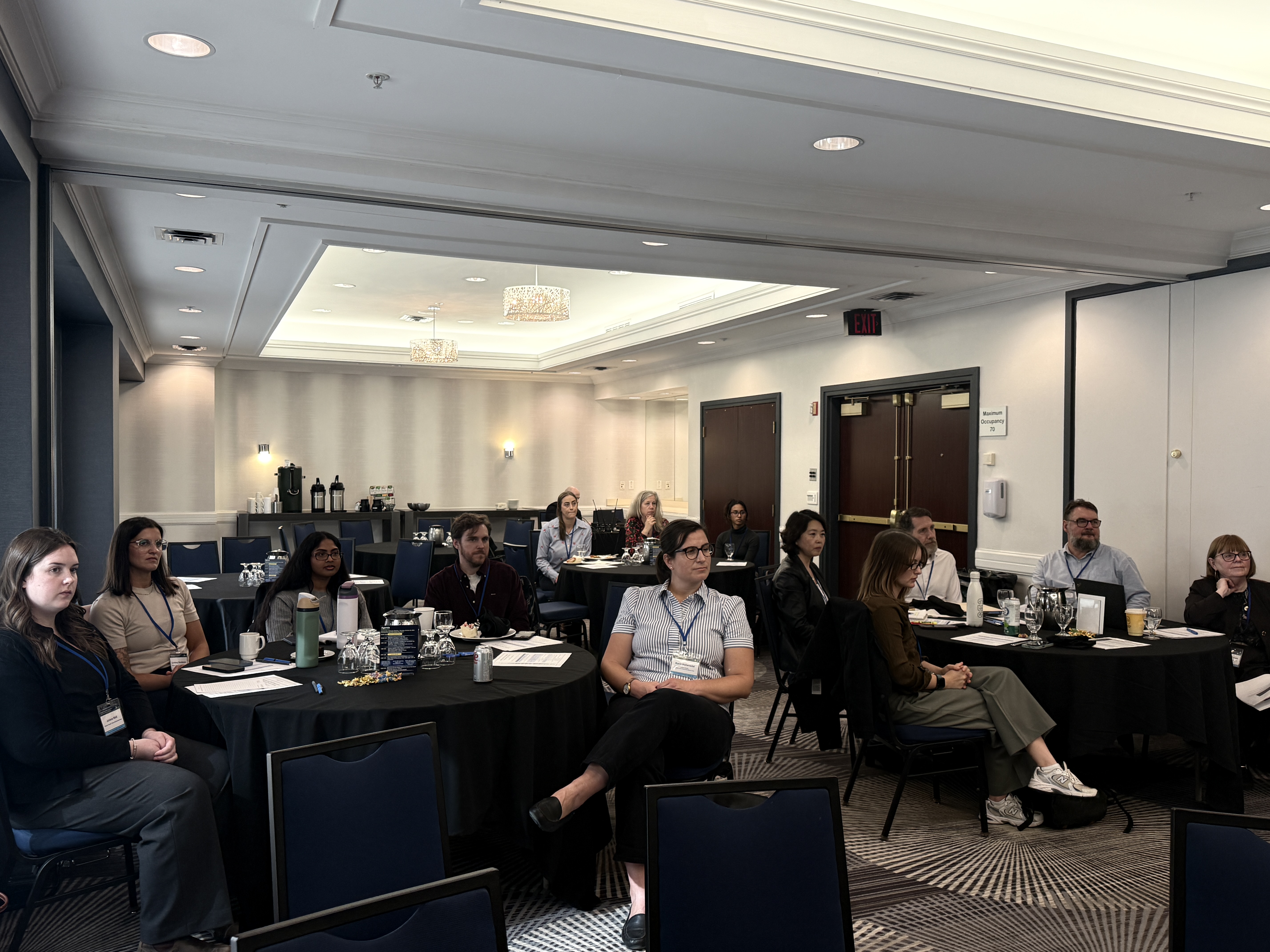
Photo 1 from the October 22, 2026 meeting
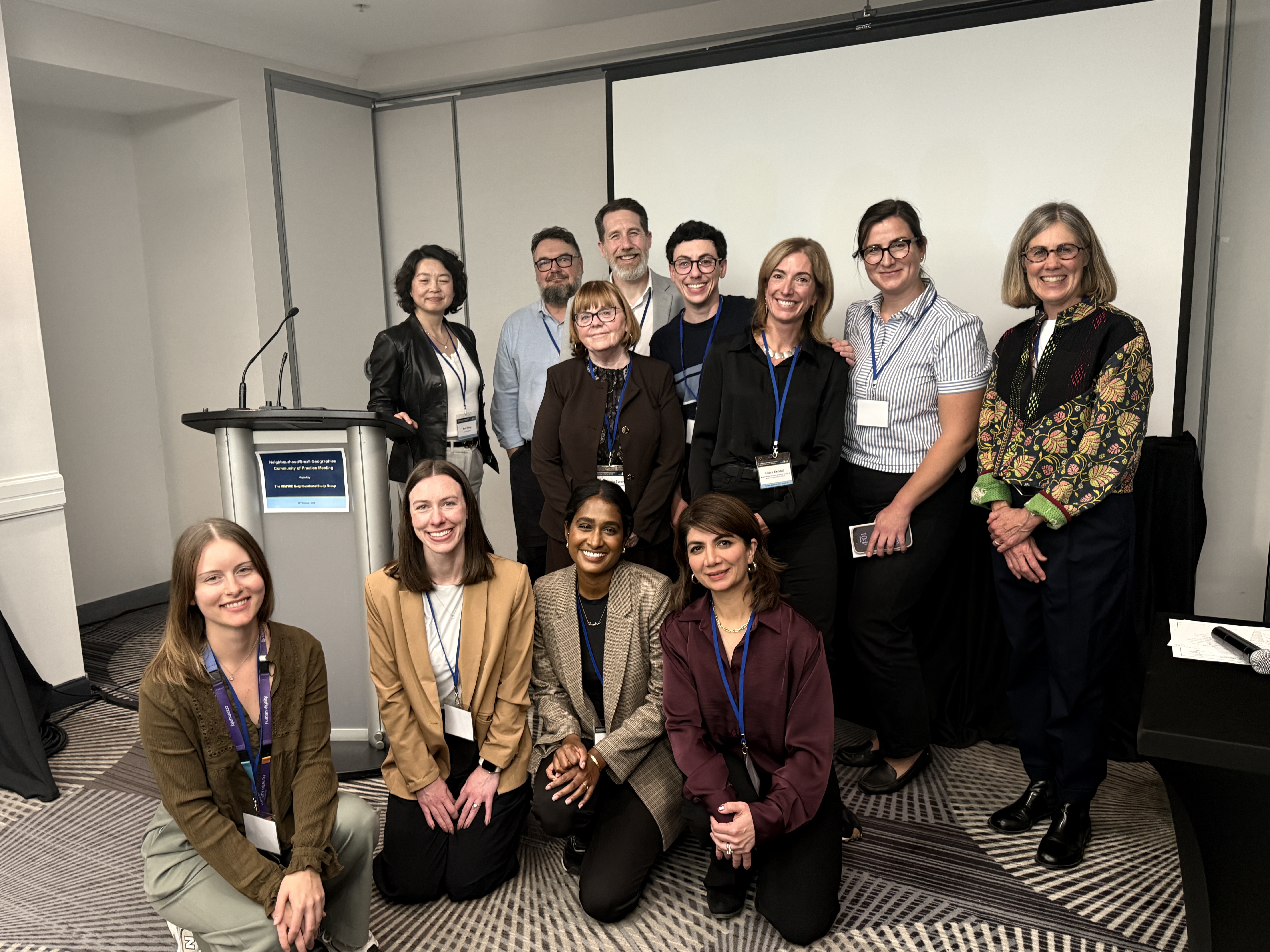
Photo 2 from the October 22, 2026 meeting
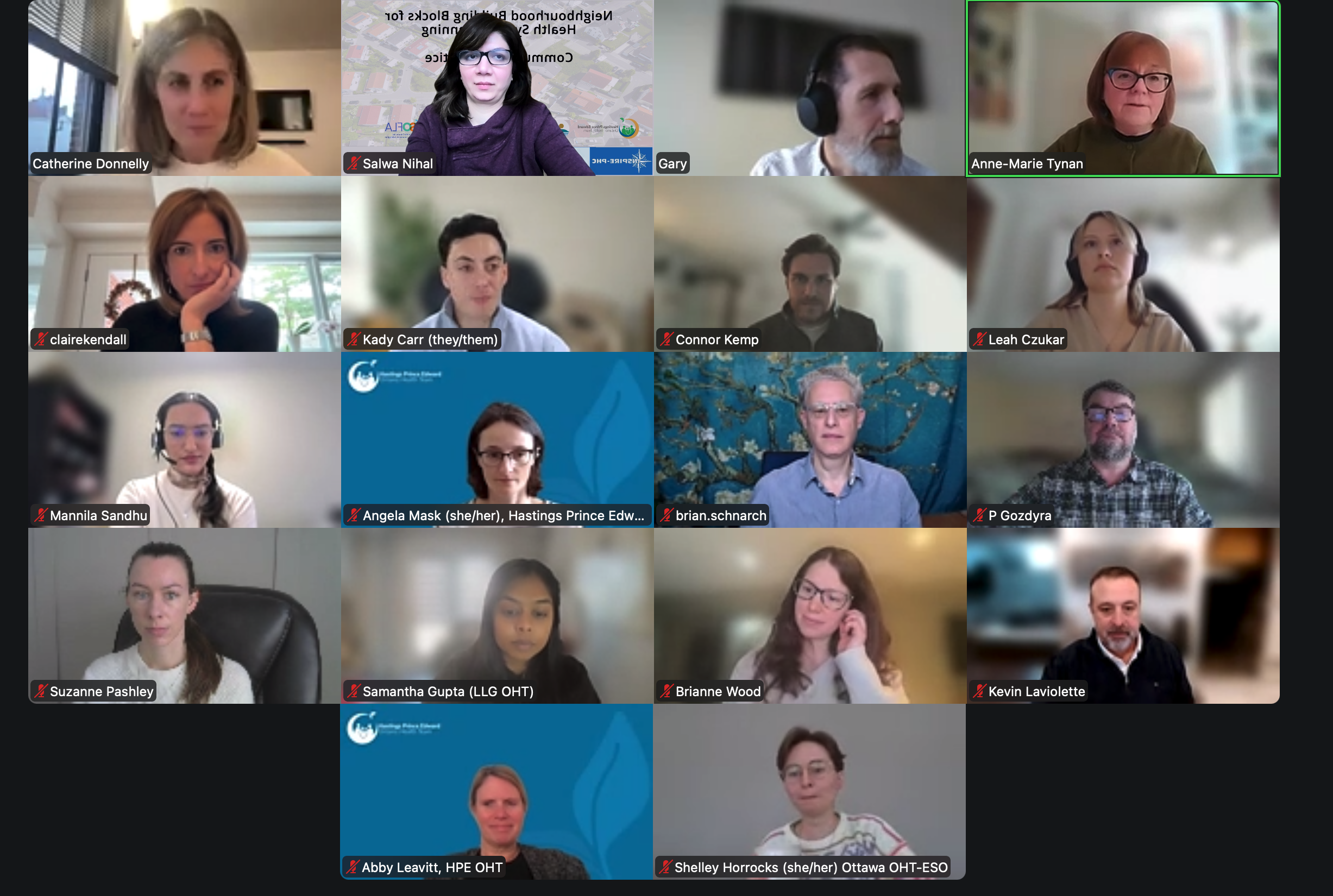
Screenshot from the December 4, 2025 meeting
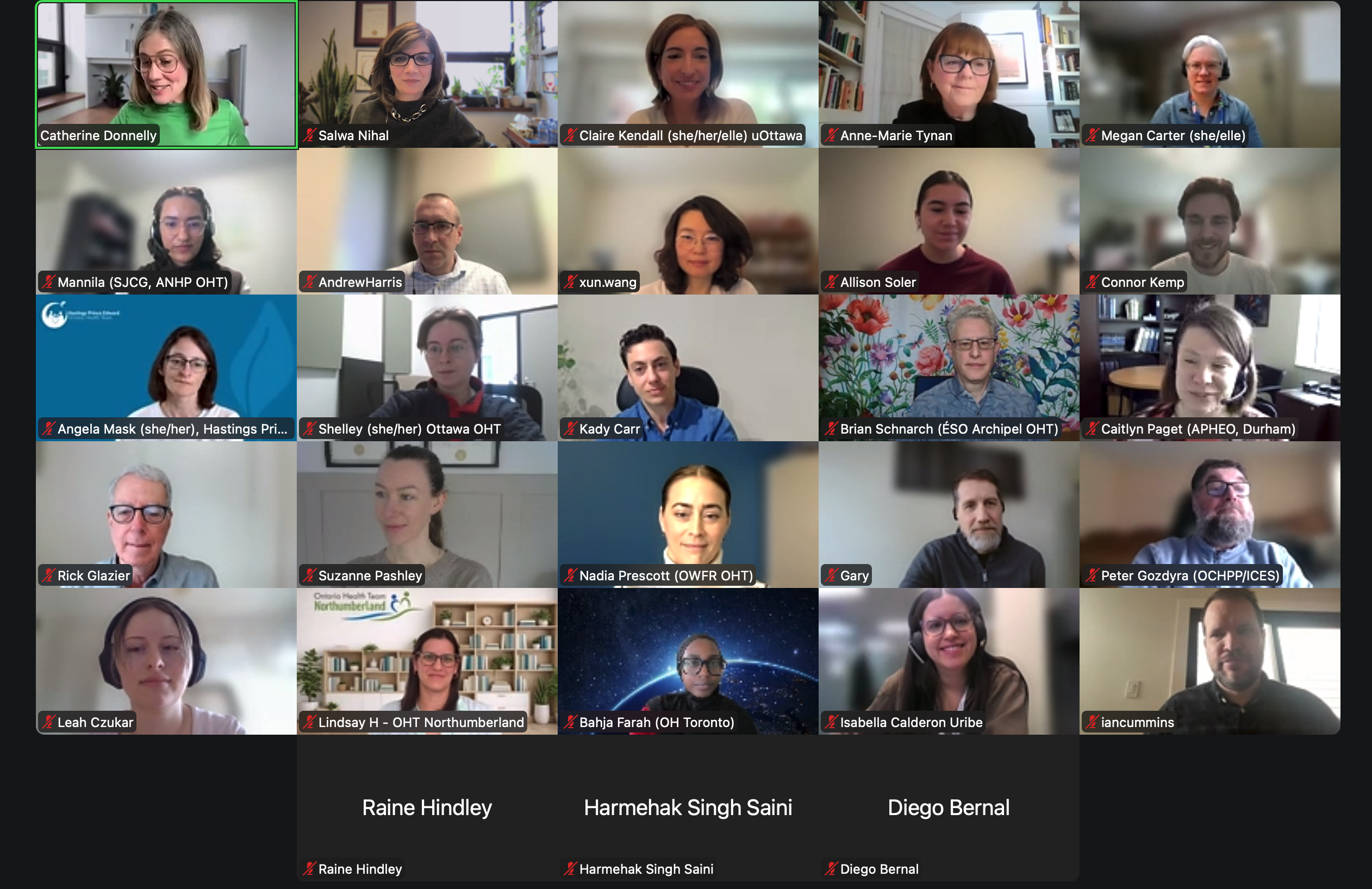
Screenshot from the April 1, 2026 meeting
Associated Research Study
In addition to work by the CoP, an associated research study (currently in progress) is examining how existing neighbourhood definitions are being used to support primary care attachment and broader health system planning.
Findings from this study, Neighbourhood Building Blocks: Regional Attachment Strategies for Team-Based Primary Care, will directly inform the work of the CoP.
For more information, please use the form below.
Study Title
Neighbourhood Building Blocks: Regional Attachment Strategies for Team-Based Primary Care
The study is funded through INSPIRE-PHC and the Ministry of Health, and is led by Dr. Catherine Donnelly (Queen's University) and Dr. Claire Kendall (Bruyère Health Research Institute).
The study examines how neighbourhoods are currently defined, which data sources are used, and where there are opportunities for alignment across Ontario Health Teams.
Principal Investigators
- Catherine Donnelly, PhD, OT (Reg.) ON, Director, Health Services and Policy Research Institute; Associate Professor, School of Rehabilitation.
- Claire Kendall, PhD, MD, Associate Dean, Social Accountability, Faculty of Medicine, University of Ottawa; Bruyère Health Research Institute.
Study Purpose
The study examines how neighbourhoods are currently defined, which data sources are used, and where there are opportunities for alignment across Ontario Health Teams.
Program Objective
Describe health care need and utilization at the neighbourhood level and work with stakeholders to consider how the evidence can inform policy options for automatic rostering.
Program Summary
- Sociodemographic indicators, including age, sex, and marginalization index.
- Health need, including chronic conditions and comorbidity burden.
- Health care utilization, including emergency department visits and hospital admissions.
- Access to primary care, including distance to a primary care physician and attachment to team-based care.
- Year 1 (2024-2025): Defining and applying small-area geographies, with early work on Aggregate Dissemination Areas. Implementation partner: Frontenac, Lennox and Addington OHT.
- Year 2 (2025-2026): Expansion to additional Ontario Health Teams across urban and rural contexts.
- Year 3 (2026-2027): Development of shared principles, recommendations on the use of geographic mapping within the OHT attribution framework, and policy engagement with provincial partners.
Examples of Ontario Health Team neighbourhood mapping are available through the Ontario Community Health Profiles Partnership.
Contact Us
If you are interested in joining the Community of Practice or would like more information, please submit your details below and a member of our team will follow up.